
Guide · Training zones
Running Training Zones Explained: Pace, Heart Rate, and Perceived Effort
Training zones divide running intensity into ranges, from very easy to maximal. Each zone has a different physiological purpose, and structured workouts use them to make sure each session is performed at the intended intensity.
The same zone can be targeted in three ways: by pace, by heart rate, or by perceived effort (RPE). What makes zones useful is that they are personal. A "Zone 2" run for one runner may be at a completely different pace from a Zone 2 run for another, because the zones are based on each runner's individual physiology.
The seven training zones
42Runs uses seven zones. Each one serves a specific role in a training plan.
| Zone | Name | What it is for |
|---|---|---|
| Z1 | Recovery | Very easy running to promote recovery between harder sessions. |
| Z2 | Aerobic | Comfortable, conversational running that builds aerobic endurance. The bulk of most training plans. |
| Z3 | Tempo | Steady, moderately hard running. Sustainable for a long time, but requires focus. |
| Z4 | SubThreshold | Just below threshold. Develops the ability to sustain a demanding pace. |
| Z5 | SuperThreshold | Just above threshold. Challenging and sustainable only for limited periods. |
| Z6 | Aerobic Capacity | Hard interval work around VO2max intensity. |
| Z7 | Anaerobic Capacity | Short, very intense efforts well above threshold. |
Zones 1 and 2 are often grouped as low aerobic intensity, Zones 3 and 4 as high aerobic, and Zones 5 to 7 as anaerobic. For most runners, the majority of weekly training time is spent in the lower zones, with a smaller, deliberate share of time at higher intensities.
Three ways to target a zone
Pace
Pace-based zones express each zone as a range of minutes per kilometre (or per mile). Pace is precise and easy to follow on a watch, and works well on flat routes in stable conditions.
Pace is less reliable on hills, trails, in strong wind, or in heat, where the same pace can require very different levels of effort.
Heart rate
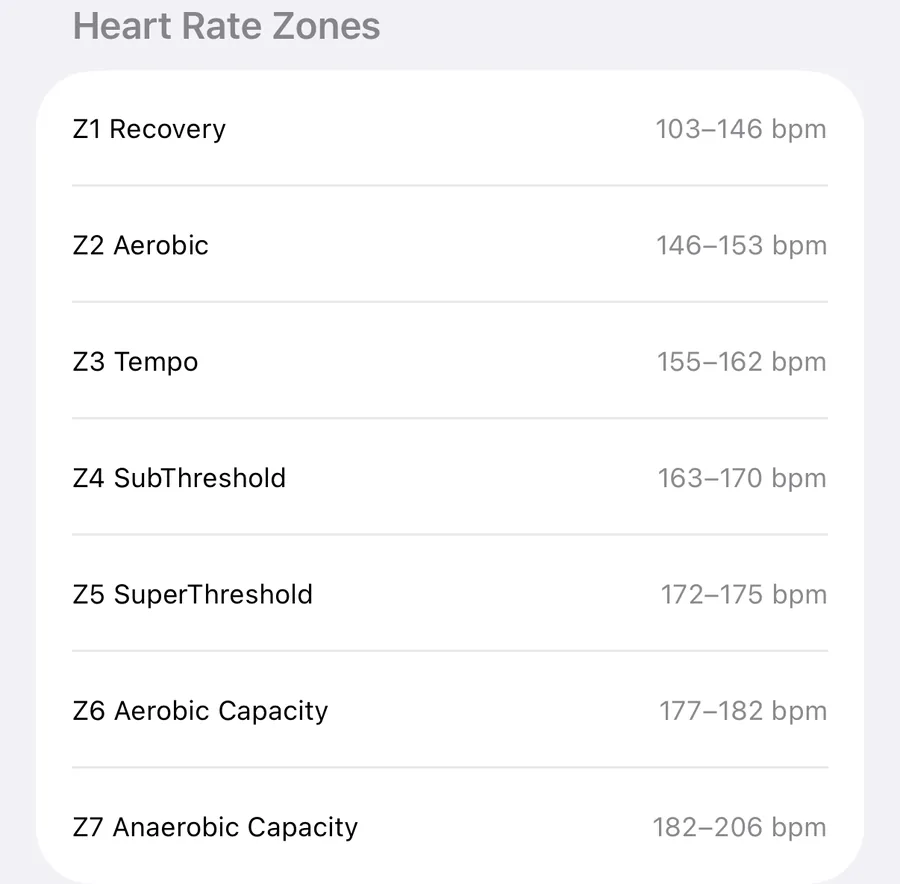
Heart-rate zones express each zone as a range of beats per minute. Heart rate reflects the body's internal response to exercise, so it naturally accounts for changes in terrain and conditions.
Heart rate does have some lag: it takes time to rise at the start of an interval, which makes it less suited to short, fast repetitions. It can also be influenced by heat, dehydration, caffeine, and fatigue.
Perceived effort (RPE)
Rate of Perceived Effort describes each zone by how it feels, rather than by a number. It requires no watch data or testing, which makes it accessible for new runners or anyone who does not yet have personal threshold values.
RPE is also a useful cross-check: if pace or heart rate says one thing but the effort feels very different, that is worth paying attention to.
All three methods describe the same seven zones. Pace and heart rate simply attach personal numbers to them.
What is a threshold?
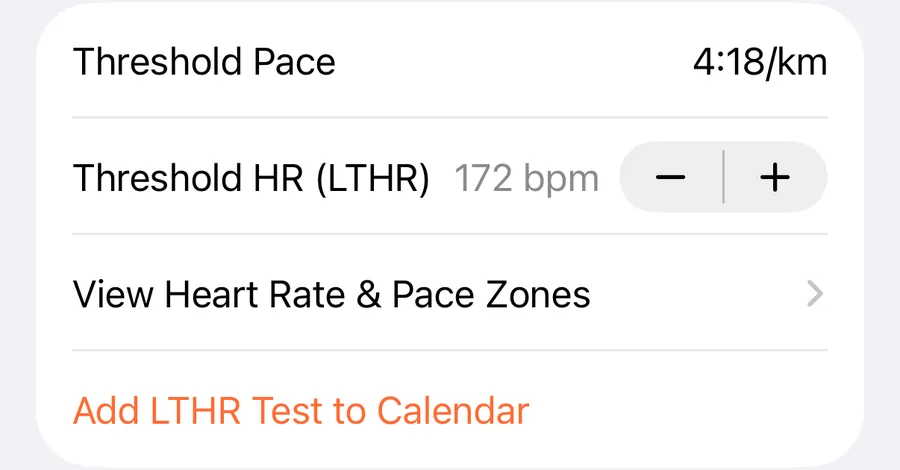
Personal pace and heart-rate zones are calculated from a threshold value. Threshold is, broadly, the highest intensity you can sustain for an extended period — roughly the effort you could hold for about an hour in a race.
Two threshold values are used:
- Threshold Pace — the pace you can sustain at that effort.
- Threshold Heart Rate (also known as lactate threshold heart rate, or LTHR) — your average heart rate at that effort.
Once these values are known, each zone is calculated as a percentage range around them.
How to find your threshold
A common way to estimate threshold is a 30-minute test:
- Warm up for 15 to 20 minutes with easy running.
- Run for 30 minutes at the hardest effort you can sustain evenly for the full duration.
- Your average pace and average heart rate over the last 20 minutes of the effort provide an estimate of your Threshold Pace and Threshold Heart Rate.
The test should be performed on a flat, uninterrupted route, ideally when well rested. Because fitness changes over time, repeating the test every few months helps keep your zones accurate.
In 42Runs, this test can be added to the calendar from the Training Zones settings. Once the completed run syncs from your watch, both threshold values are calculated automatically.
Why generic zones often don't fit
Many generic formulas estimate zones from age, such as a maximum heart rate of "220 minus age". These formulas describe population averages, and individual values can differ considerably. Two runners of the same age can have very different maximum and threshold heart rates.
Zones based on your own measured threshold are more likely to reflect your actual physiology. That means easy runs are genuinely easy, harder sessions are hard enough to be effective, and the training load calculated from each session is more meaningful.
Zones in practice
Every structured workout in 42Runs targets one of these zones, using pace, heart rate, or RPE. When personal threshold values are set, the workout targets are calculated from your own numbers and sent to your watch, so the intended intensity is displayed during the run.
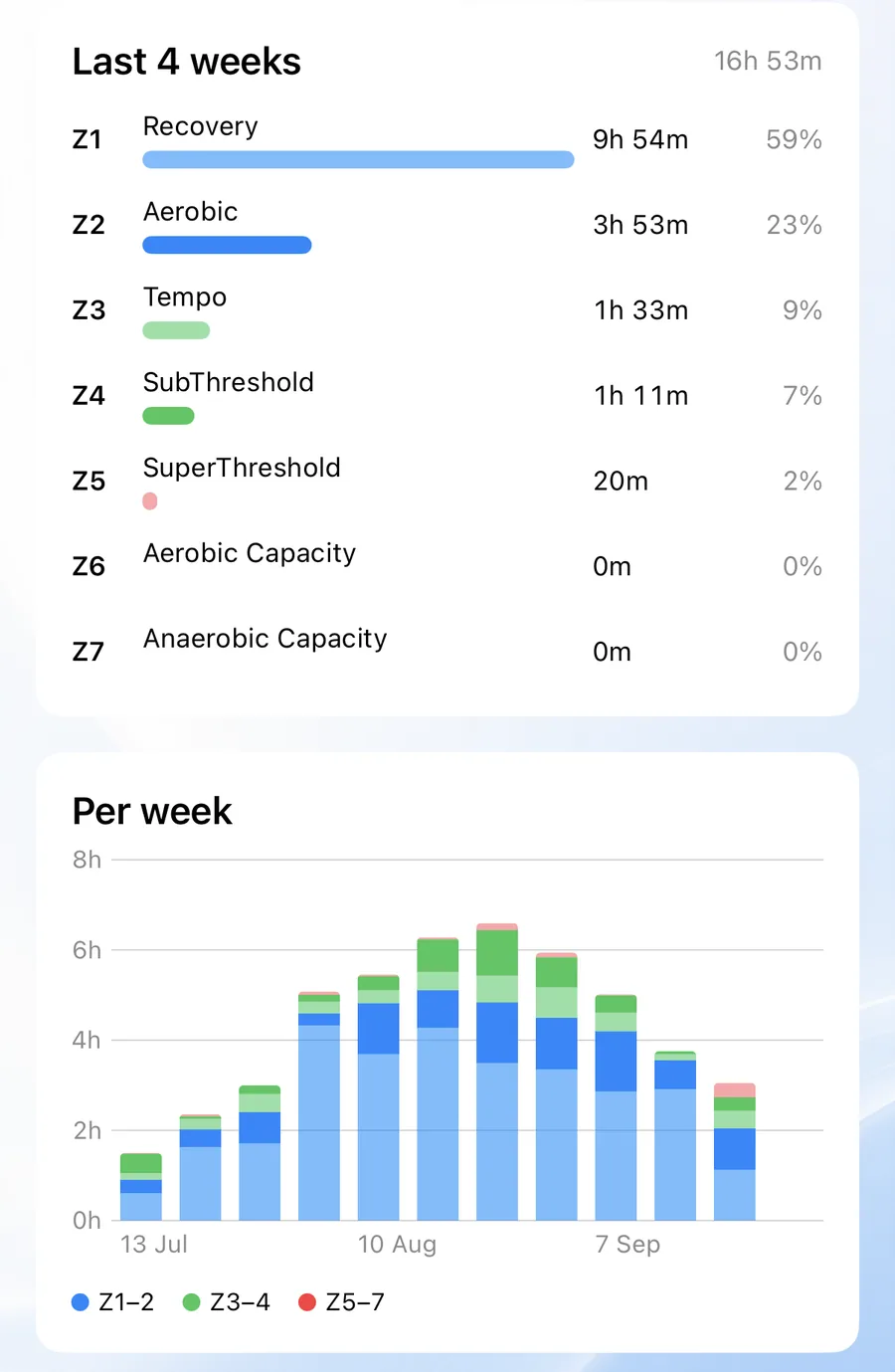
For more on how training intensity adds up over time, see our guide to Fitness, Fatigue, and Form.