
Guide · Training load
Fitness, Fatigue, and Form: What They Mean and How to Read Them
Fitness, Fatigue, and Form are three related numbers that describe how your training load builds up over time. Fitness reflects the training you have absorbed over the past several weeks. Fatigue reflects the training you have done over the past several days. Form is the difference between the two and gives an indication of how fresh or tired you are likely to be at a given moment.
Understanding how these three numbers relate to each other makes it easier to see whether your training is building toward your goal or whether you are carrying more load than your body has had time to absorb.
What is Fitness?
Fitness is a rolling measure of your training load over roughly the past six weeks. Every completed workout contributes to it, weighted by how hard and how long that workout was.
Because it is averaged over a longer period, Fitness changes slowly. A single hard session or a single rest day has only a small effect on it. What moves Fitness is consistency: training regularly over weeks and months. This is also why Fitness is a useful indicator of your current aerobic base — it reflects the cumulative work your body has been exposed to, rather than just what you did yesterday.
A rising Fitness trend generally means your training volume and intensity are increasing over time. A flat or falling trend means your recent training load is similar to, or lower than, what you were doing before.
What is Fatigue?
Fatigue is a rolling measure of your training load over roughly the past seven days. It is calculated in a similar way to Fitness, but over a much shorter period.
Because of this shorter window, Fatigue responds quickly. A hard training week raises it noticeably, while a few easy days or a rest day can bring it back down just as quickly. Fatigue represents the short-term stress your body is currently dealing with, rather than your long-term capacity.
It is normal for Fatigue to rise and fall throughout a training block. A training plan is designed to create periods of higher load, followed by periods where that load is reduced so the body can recover and adapt.
What is Form?
Form is calculated as Fitness minus Fatigue. It describes the balance between your long-term training base and your recent training load.
- Negative Form means your recent load (Fatigue) is higher than your longer-term base (Fitness). This is common and expected during a focused training block, when you are deliberately building load. It does not, by itself, mean something is wrong.
- Form close to zero means your recent training is roughly in line with what your body is accustomed to.
- Positive Form means your recent load is lower than your longer-term base. This typically happens during a recovery week or a taper before a race and indicates that you are carrying less fatigue relative to your fitness.
For example, if your Fitness is 45 and your Fatigue is 52, your Form is −7. This means your recent training has been heavier than your long-term average. That is normal in the middle of a training block, but it is worth keeping in mind before scheduling another hard session.
Why the three numbers belong together
Looking at any one of these numbers on its own can be misleading.
A high Fitness number describes how much training you have absorbed, but not whether you are currently rested enough to perform. A high Fatigue number shows that you have been training hard recently, but not whether that load is appropriate for your current level. Form combines both to show the balance between them.
Looking at the three together can help identify two common situations in training:
- Undertraining, where Fitness does not rise enough to support the goal you are working toward.
- Overreaching, where Fatigue stays high for too long relative to Fitness and the body does not get enough time to recover and adapt to the work.
These metrics are useful indicators, but they are not a complete picture. They are based on training load calculated from pace and heart rate, and they do not account for sleep, stress, illness, or how you actually feel. They are best used alongside your own assessment of how training is going, rather than as a replacement for it.
Training Load: the input behind all three
Fitness and Fatigue are both built from Training Load, a single number assigned to each workout that combines its duration and intensity. A long, easy run and a short, hard interval session can produce very different Training Load values, even if they take a similar amount of time.
Because Training Load is the input for everything described here, accurate intensity data matters. Training Load is calculated from heart rate and pace data recorded by your watch, so a correctly configured watch and accurate personal training zones lead to more meaningful Fitness, Fatigue, and Form values.
Where to see these numbers
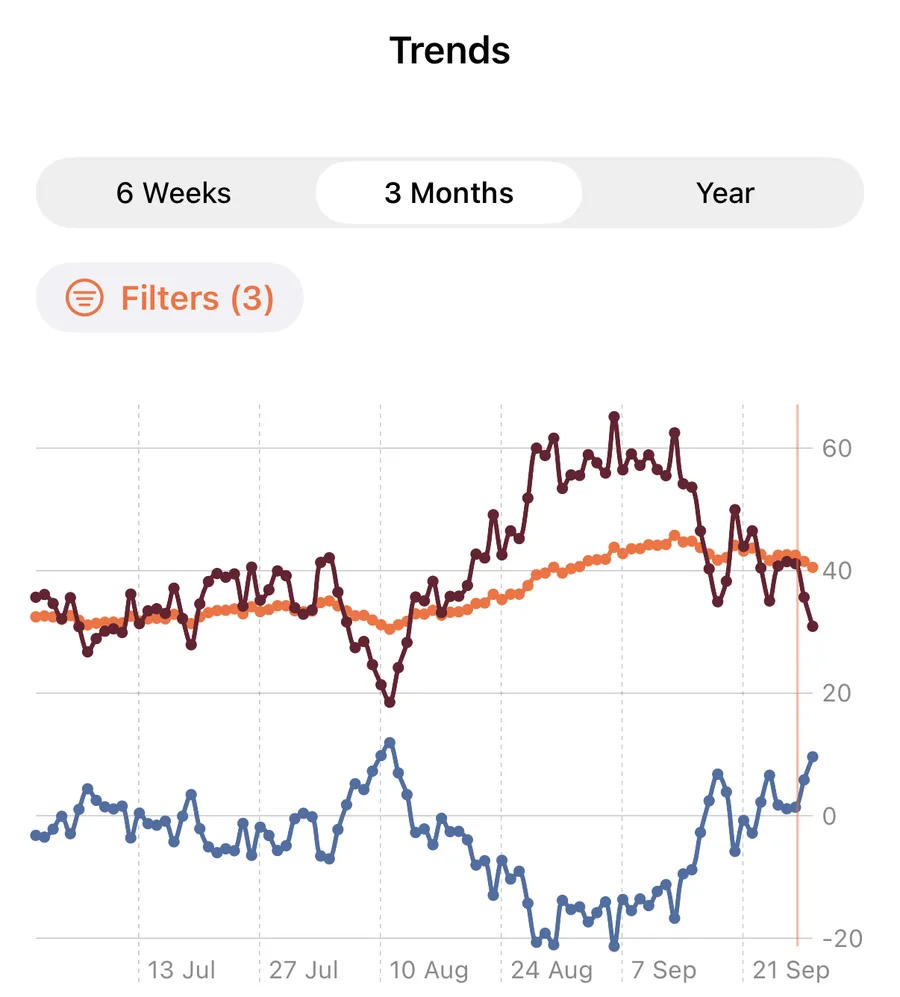
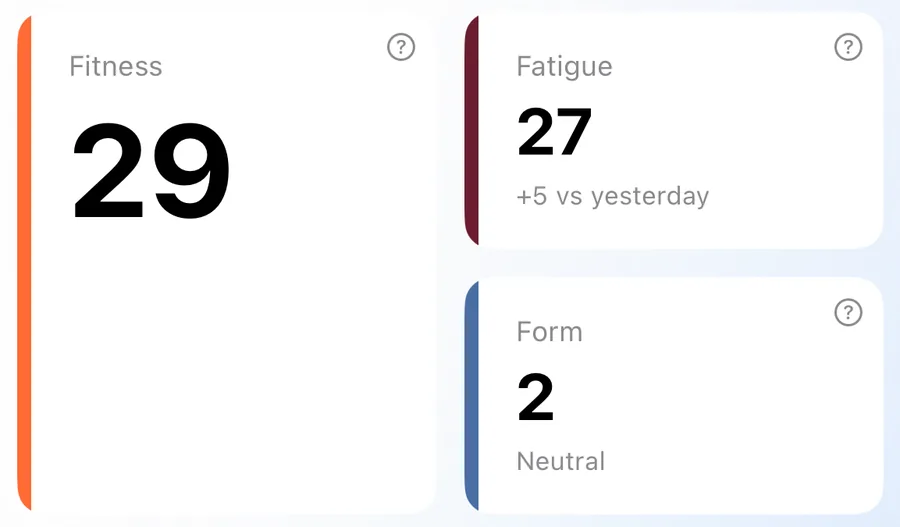
In 42Runs, Fitness, Fatigue, and Form appear as cards on the Home screen and are updated as your completed workouts sync from your watch. The full trend history for all three is available in the Insights section, where you can compare them over the past six weeks, three months, or year.
For a closer look at how intensity is measured and how personal zones affect Training Load, see our guide to running training zones.